
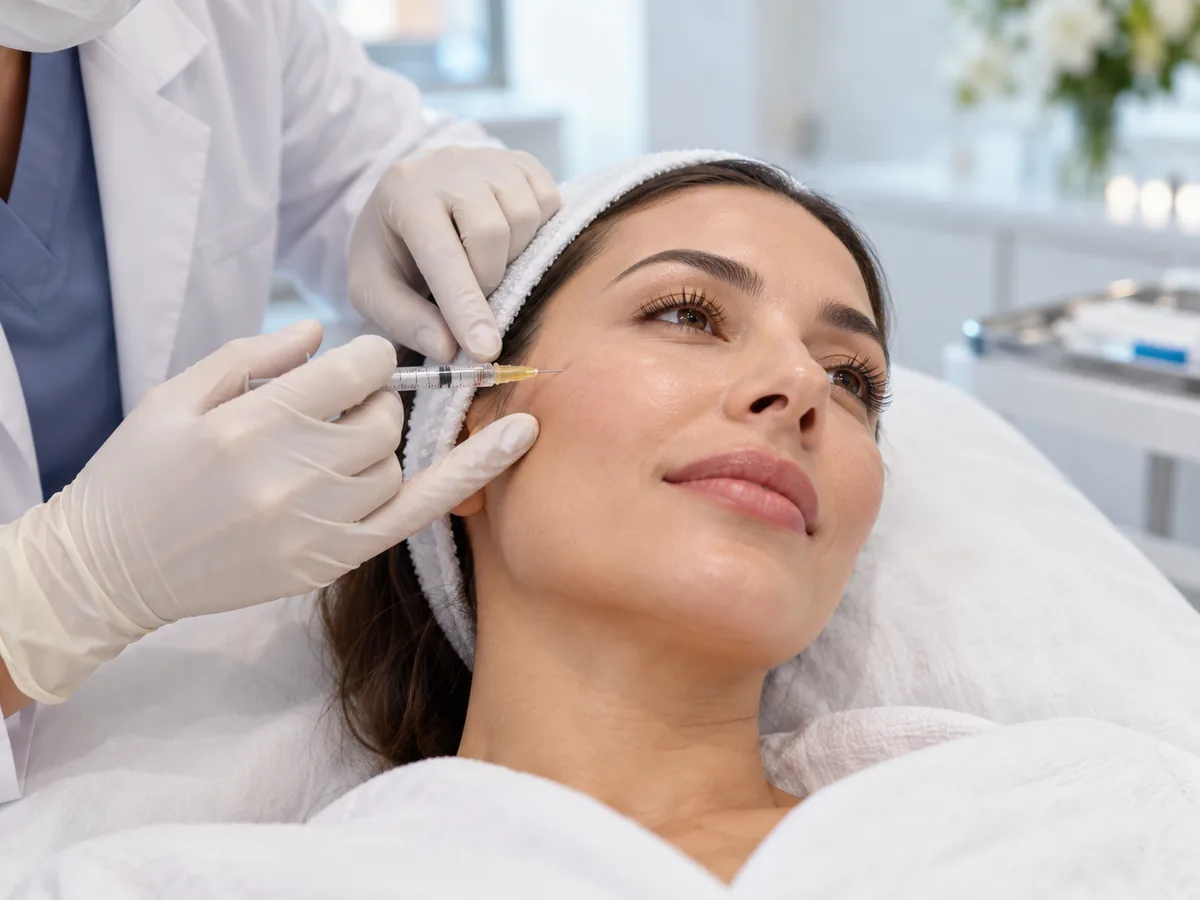
Facial fat grafting (lipofilling, fat transfer) is the transfer of your own fat, taken from an area such as the abdomen or thigh and prepared, to areas of the face that have lost volume, using thin cannulas. It is used to restore facial volume lost with age, to correct contour irregularities and to support operations such as a facelift.
Who is it suitable for?
It can be considered for people with volume loss in the cheeks, temples, the transition between the lower eyelid and cheek, the jawline or around the lips, whose face looks hollow or tired. It can also be used for contour irregularities after previous surgery or injury and for some facial asymmetries.
There needs to be enough fat on the body to harvest; very slim people may not have enough. If there is marked sagging, fat grafting does not correct it; in that case it can be planned together with a facelift.
Assessment before surgery
At the examination, which areas of your face have lost volume and to what extent, skin quality, facial proportions and the areas from which fat can be taken are assessed. Previous fillers or other treatments, medications, blood thinners and smoking are asked about.
The aim is not to fill the face but to restore lost volume in natural proportions. Which areas receive how much fat is therefore planned in moderation and individually.
How is it done?
First, fat is taken with thin cannulas at low pressure from an area such as the abdomen, waist or thigh. The fat is cleaned of blood and fluid and prepared for injection. It is then placed through small entry points on the face with blunt, thin cannulas, in very small amounts, spread across different depths.
Distributing the fat in small portions makes it easier for it to receive a blood supply and survive. The areas and depths of injection are planned carefully according to facial anatomy.
Fat survival and variability of the result
Not all of the transferred fat is permanent. Some of the fat is absorbed by the body in the first months; the part that settles and gains a blood supply becomes permanent. How much fat survives varies from person to person and area to area and cannot be known exactly in advance.
The result can therefore vary, and some people may need more than one session to reach the desired volume. Fat that becomes permanent is affected by weight gain and loss like the body’s other fat.
Anesthesia and hospital stay
Depending on its scope, the procedure is done under local anesthesia with sedation or under general anesthesia. When done on its own, you usually go home the same day. When combined with other operations such as a facelift, the hospital stay is planned according to that operation.
Recovery and what to pay attention to
After the procedure there is swelling and bruising both where the fat was injected and where it was taken. Facial swelling is most marked in the first days and usually goes down considerably within a few weeks. It is normal for the face to look fuller than intended in the early period.
In the first weeks, avoiding pressure and massage on the treated areas is recommended. A compression garment may be needed for a short time on the area where fat was taken. The fat settles and the final appearance becomes clear over a few months.
Risks and possible complications
Swelling, bruising, more fat being absorbed than expected, asymmetry between the two sides, surface irregularities or small lumps, oil cysts and firm areas can occur. Injecting too much fat can lead to an unnatural look. Infection and irregularities at the area where fat was taken are also possible risks.
A rare but serious risk is blockage of a blood vessel caused by fat entering a vessel (fat embolism). This can impair the skin’s blood supply and, although very rarely, lead to severe outcomes such as loss of vision or stroke. To reduce this risk, the injection must be done with blunt cannulas, at low pressure, in small amounts and with attention to the anatomy of areas where blood vessels are dense. Facial fat grafting should therefore be performed by a doctor who knows facial anatomy well, in appropriate conditions.
If there is sudden severe pain in the face, a change in skin color or any problem with vision after the procedure, seek medical help without delay.
Frequently asked questions
Is fat grafting permanent?
Fat that survives is permanent; however, some of the transferred fat is absorbed and how much remains varies from person to person. Fat that becomes permanent is affected by weight changes, and the face continues to age.
How many sessions are needed?
For some people one session is enough, while others may need a second session to reach the desired result. Whether an additional session is needed is assessed once the fat has settled.
What is the difference between fillers and fat grafting?
Fillers are ready-made products that are absorbed over time; the treatment does not require surgery. Fat grafting uses your own tissue, and the part that survives is permanent; however, because fat has to be harvested, it is a more extensive procedure. Which is suitable depends on your needs.
Where is the fat taken from?
Areas with fat, such as the abdomen, waist, hips or inner thigh, are mostly preferred. The amount needed for the face is usually small.
Can fat grafting replace a facelift?
No. Fat grafting restores lost volume; it does not lift sagging tissue. If there is both sagging and volume loss, the two methods can be combined in the same operation.
If you have had fillers or any other substance injected into your face before, mention when and where at your consultation. This information is important for planning and safety.
The information on this page is for general information only and does not replace an examination, diagnosis or treatment decision. Every patient is different and results vary from person to person. The decision to have surgery is made together, after an examination.
Would you like more information or an appointment?
Fill in the appointment request form or call us. We will get back to you as soon as possible.