
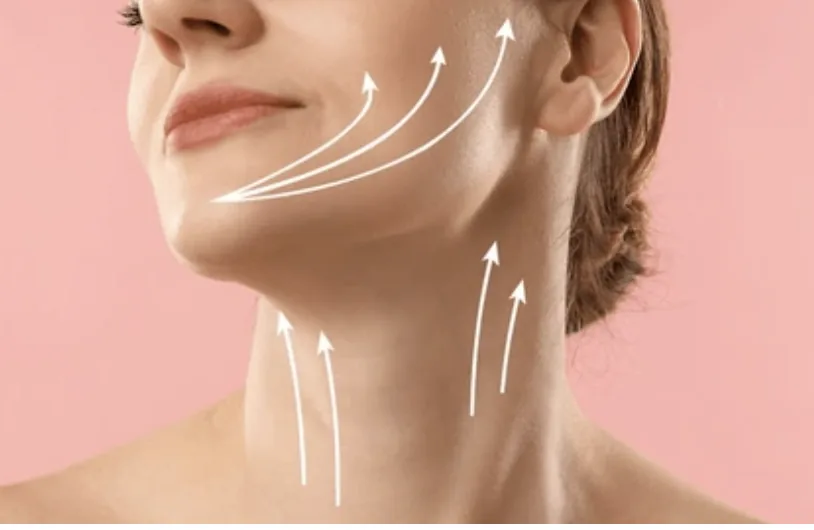
A neck lift is an operation that corrects laxity of the neck and under the chin that appears with age or weight changes. The appearance of the neck is a combination of excess skin, laxity of the thin neck muscle called the platysma, and fat under the chin. The treatment plan depends on which of these components is most prominent.
What changes in the neck?
Aging of the neck usually appears through three components. The skin loses its elasticity and sags, forming folds on the neck. The front edges of the platysma muscle loosen and separate, becoming visible as vertical bands on the neck. Fat that collects under the chin blurs the angle between the jaw and neck and creates a double chin.
In some people fat is the main issue, while in others laxity of the skin and muscle is more prominent. This distinction needs to be made at the examination for correct planning.
Who is it suitable for?
People with marked sagging, muscle bands or fat under the chin and on the neck, and good general health, can be assessed for a neck lift. In people with good skin elasticity whose problem is mainly fat, neck liposuction alone may be enough.
If there is also sagging of the cheeks and jawline, a neck lift is usually planned together with a facelift. These areas are connected, and correcting only the neck can give a result that does not match the face.
Assessment before surgery
At the examination, excess neck skin, platysma bands, fat under the chin, the position of the chin and the jaw–neck angle are assessed. Features that affect the appearance of the neck but cannot always be changed with surgery, such as prominent salivary glands and jaw structure, are also discussed.
As with a facelift, your blood pressure, medications and supplements, smoking and general health are asked about in detail.
Combination with liposuction
Fat under the chin and on the neck can be reduced with liposuction using thin cannulas through small incisions. If skin elasticity is sufficient, the skin adapts to the new contour. Liposuction is also often used as part of a neck lift.
If the skin is loose or the muscle bands are prominent, liposuction alone may not provide enough correction and can even make the laxity more visible. Which method is suitable is therefore decided together at the consultation.
Incision options and how the operation is performed
A neck lift usually uses a short incision placed in the natural crease under the chin. Through this incision the fat is refined, and the front edges of the platysma muscle are stitched together in the midline to correct the neck bands (platysmaplasty).
If there is marked excess skin, the incision is extended behind the ear and into the hair, as in a facelift; the skin is repositioned upwards and backwards and the excess removed. The location and length of the incisions depend on the amount of excess neck skin. Depending on the scope of the operation, a drain may be used for a short time.
Anesthesia and hospital stay
Depending on the scope of the operation, general anesthesia or local anesthesia with sedation is used. With liposuction alone or limited procedures, going home the same day is possible; when combined with a facelift, patients usually stay in hospital for one night.
Recovery and what to pay attention to
After surgery there is swelling, bruising, tightness and numbness of the neck. In the early period, a bandage or compression strap supporting the chin and neck may be used; how long to wear it will be explained to you separately. Keeping the head raised and avoiding bending the neck too much are recommended.
Most people can return to social life in about two weeks. Firmness and slight irregularities in the neck soften over a few months; the final appearance emerges over time.
Risks and possible complications
Hematoma, infection, wound healing problems and a noticeable scar can occur. Irregularities or dents can form in areas treated with liposuction; removing too much fat can make the neck look overly thin and unnatural.
Injury to the nerve branch that moves the lower lip is rare and usually temporary. Some laxity of the neck may return over time. In some cases small corrective procedures may be needed.
Frequently asked questions
Can a neck lift be done on its own?
Yes. If sagging is mainly in the neck and under the chin, a neck lift can be done on its own. If there is also marked sagging of the cheeks and jawline, it is usually planned together with a facelift for a harmonious result.
Is liposuction alone enough for a double chin?
In people with elastic skin whose problem is mainly fat, liposuction may be enough. If there is skin laxity or prominent muscle bands, liposuction alone does not provide enough correction.
Can Botox improve neck bands?
For mild platysma bands, botulinum toxin can provide temporary softening. For excess skin and prominent bands, surgery is usually needed for a lasting correction.
Where will the scar be?
The short incision under the chin stays in the natural crease. If the incision was extended around the ear because of excess skin, the scars are behind the ear and along the hairline. Scar quality varies from person to person.
The appearance of the neck is also affected by features that cannot always be changed with surgery, such as jaw structure, salivary glands and bone structure. We assess together at the consultation which changes are possible.
The information on this page is for general information only and does not replace an examination, diagnosis or treatment decision. Every patient is different and results vary from person to person. The decision to have surgery is made together, after an examination.
Would you like more information or an appointment?
Fill in the appointment request form or call us. We will get back to you as soon as possible.