
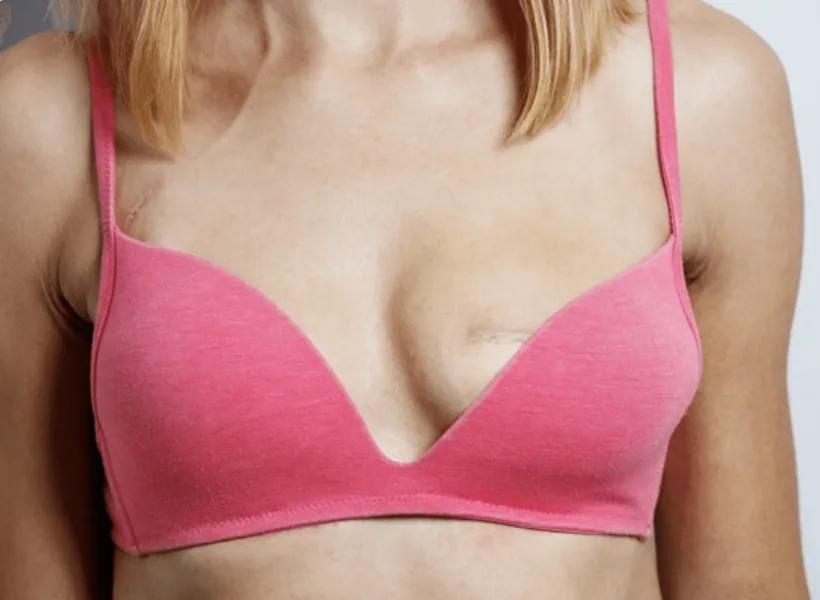
Breast reconstruction is the rebuilding of the breast after all or part of it has been removed during or after breast cancer treatment. This process means different things to every woman. My aim is to discuss the options that suit you openly, keeping the priorities of your cancer treatment in mind, and to make the decision together with you, at the right time for you.
Who is it suitable for?
Women who have had, or will have, all (mastectomy) or part of a breast removed because of breast cancer can be assessed for breast reconstruction. Reconstruction is also considered for people planning a preventive (prophylactic) mastectomy because of a genetic predisposition.
Reconstruction is not an obligation. Some women choose not to have reconstruction or to use an external prosthesis; this is also a valid choice that is respected. The decision is yours at every stage.
Coordination with the oncology team
In breast cancer treatment, the priority is treating the cancer. The reconstruction plan is made together with your treatment team of general surgeon, medical oncologist and radiation oncologist. Whether chemotherapy and especially radiotherapy are needed directly affects which method and timing will be suitable.
In general, reconstruction does not interfere with cancer treatment and follow-up. We stay in contact with your team throughout your treatment and update the plan when needed.
Immediate or delayed reconstruction
Reconstruction can be done in the same operation as the mastectomy (immediate) or months or years after treatment is complete (delayed). In immediate reconstruction, the breast skin can often be preserved and the breast shape is partly created in the first operation. Delayed reconstruction can be planned after treatment is complete, when you feel ready.
In patients for whom radiotherapy is planned, the choice of timing and method needs extra care; implant-related problems are more likely in irradiated tissue. For this reason, some patients start with a temporary solution and have permanent reconstruction later.
Assessment before surgery
The assessment considers together your cancer treatment plan, general health, the condition of the chest wall and skin, your body shape and the tissues available, smoking and your expectations. The other breast is also assessed; procedures such as reduction, lift or augmentation of the other breast may be considered at later stages for symmetry.
There is no need to rush these conversations. Answering your questions and making the options clear to you is an important part of the process.
Reconstruction with an implant
In implant reconstruction, a tissue expander is often placed first. At check-ups the expander is gradually filled with saline to stretch the skin and tissues, and it is then replaced with a permanent implant in a second operation. In suitable patients, a permanent implant can be placed directly during the mastectomy.
This method does not require an extra incision elsewhere on the body, and the operation is shorter. However, problems such as capsular contracture are more likely in irradiated tissue. It should also be remembered that the implant may need replacement or further surgery over time.
Reconstruction with your own tissue (flap)
In flap methods, the breast is rebuilt using skin, fat and sometimes muscle taken from an area such as the abdomen, back or thigh. Tissue taken from the abdomen can be moved together with its blood vessels and connected to vessels in the chest with microsurgery (for example, a DIEP flap). Reconstruction using the broad back muscle (latissimus dorsi) is often combined with an implant.
A breast made from your own tissue can have a more natural feel, changes with weight changes and does not carry the long-term problems associated with implants. On the other hand, the operation takes longer, there is also a scar where the tissue is taken, and recovery is longer. Which method is suitable is decided according to your body shape, treatment plan and preference.
A multi-stage process
Breast reconstruction is often not completed with a single operation. The first operation may be followed by replacing the expander with a permanent implant, shape and symmetry corrections, contour refinement with fat grafting if needed, and procedures on the other breast. In the final stage, the nipple and areola are created.
The process unfolds over months, following the schedule of your cancer treatment. We plan the timing of each stage together so that it fits your recovery and your treatment team’s recommendations.
Nipple reconstruction
Rebuilding the nipple and areola is usually the last stage of the process and is planned once the new breast shape has settled. The nipple can be created with a small local flap made from the skin of the new breast; the color of the areola can be provided with medical tattooing (pigmentation).
Some women choose not to have nipple reconstruction, or to have only a tattoo to give the appearance. In suitable patients it may also be possible to preserve the nipple during the mastectomy; this decision is made with your treatment team with oncological safety in mind.
Anesthesia and hospital stay
Reconstruction operations are performed under general anesthesia. The length of hospital stay depends on the method: usually short after implant reconstruction, and several days after flap operations because the transferred tissue needs close monitoring. Small stages such as nipple reconstruction can often be done under local anesthesia.
Recovery and what to pay attention to
Recovery time depends on the method used, whether reconstruction was done at the same time as the mastectomy and on any ongoing treatment. After implant reconstruction, returning to daily life is usually possible within a few weeks; after flap operations it takes longer, and the area where the tissue was taken also needs to heal.
The use of drains, a bra or a compression garment, arm movements and the return to exercise will be explained to you separately. It is normal to feel tired and to have emotional ups and downs during this period; do not hesitate to accept support from those close to you and, when needed, from professionals.
Sensation in a reconstructed breast is usually reduced or different. Your cancer follow-up continues according to your oncology team’s plan.
Risks and possible complications
As with any operation, bleeding, infection, wound healing problems and scarring can occur. The blood supply to the skin remaining after a mastectomy can be impaired. With implant reconstruction there are risks such as capsular contracture, the need to remove the implant because of infection and other implant-related problems; with flap reconstruction there are risks such as partial or, rarely, complete loss of the transferred tissue, healing problems where the tissue was taken, and weakness or hernia of the abdominal wall.
Radiotherapy, smoking, diabetes and excess weight can increase these risks. We discuss the risks and options specific to you in detail at the consultation.
Frequently asked questions
Does reconstruction make cancer follow-up harder?
It is generally accepted that breast reconstruction does not increase the risk of cancer recurrence or interfere with follow-up. The follow-up method and intervals are set by your oncology team; it is important to mention that you have had reconstruction at examinations and imaging.
Can I have reconstruction years after a mastectomy?
Yes. Reconstruction can be planned years after treatment is complete. In that case, the suitable method is chosen by assessing the condition of the tissues, the treatments you have had and your general health.
Which method is right for me?
This decision depends on your treatment plan, whether you have had radiotherapy, your body shape, the characteristics of the other breast and your preferences. We assess the advantages and limitations of each method together at the consultation.
Will there be sensation in the new breast?
Because the nerves of the breast are affected during a mastectomy, sensation in the reconstructed breast is usually reduced or changed. Some sensation may return over time; however, this varies from person to person and cannot be predicted in advance.
Can reconstruction be done if only part of the breast was removed?
Yes. Shape changes after breast-conserving surgery can be corrected by rearranging the remaining breast tissue (oncoplastic surgery), with fat grafting or with small flaps. The suitable method is decided together with your treatment team.
Decisions about breast reconstruction are made together with the team managing your cancer treatment. It is important to also share your questions about your treatment with your oncology team.
The information on this page is for general information only and does not replace an examination, diagnosis or treatment decision. Every patient is different and results vary from person to person. The decision to have surgery is made together, after an examination.
Would you like to talk about your reconstruction options?
Whatever stage of treatment you are at, we can go through the options together in a calm setting. Bringing your treatment information and any reports to the consultation makes planning easier.