
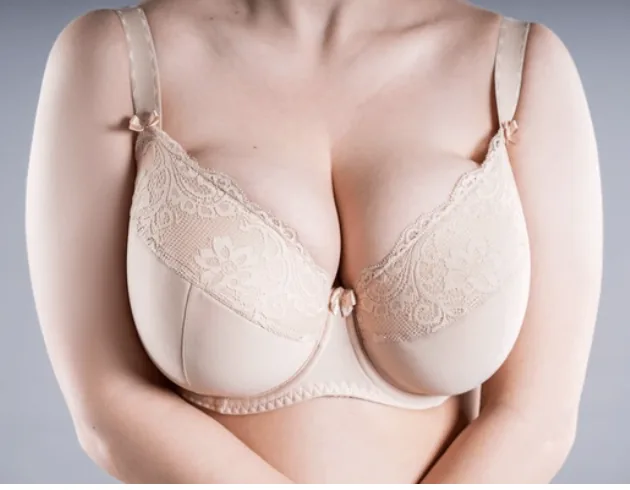
Breast reduction (reduction mammoplasty) is an operation that removes excess breast tissue, fat and skin to make the breast smaller, higher and more in proportion with the body. It is not only an aesthetic choice; easing the physical complaints caused by large breasts is also one of its main aims.
Who is it suitable for?
People who have physical or psychological difficulties in daily life because of the size of their breasts, whose breast development is complete and whose weight is stable can be assessed for breast reduction. Markedly large breasts and related complaints can also appear at a young age; in that case the timing of surgery is assessed separately.
If you are planning to lose weight, having the operation after you reach your target weight is better for maintaining the result.
Physical complaints
Large, heavy breasts can cause back, neck and shoulder pain, bra straps leaving grooves on the shoulders, and poor posture. Sweating, chafing, redness and recurrent skin infections in the fold under the breast are common. Difficulty doing sport, finding clothes that fit and standing for long periods are also among these complaints.
By reducing the weight of the breasts, breast reduction can help ease these complaints. However, because pain can have other causes too, a general assessment is made at the examination.
Assessment before surgery
At the examination, breast size, skin quality, the degree of sagging, the position of the nipple and the difference between the two breasts are assessed. Your complaints, general health, medications and smoking are asked about.
Depending on your age and risk, a breast ultrasound or mammogram may be requested before surgery. The tissue removed during surgery is sent for pathological examination.
Preserving the nipple
In breast reduction, the nipple and the colored area around it (areola) are moved to their new, higher position while keeping their connection to the underlying tissue. This connection is meant to preserve the blood supply of the nipple and, in most patients, its sensation. The direction from which this connection is preserved is chosen according to the size and structure of the breast.
In very large breasts, it may rarely be necessary to remove the nipple separately and place it in its new position as a skin graft. With this method, nipple sensation and the ability to breastfeed are largely lost; it is therefore used only when necessary and is discussed in detail beforehand.
Effect on breastfeeding
With methods that preserve the nipple’s connection to the underlying milk ducts and glandular tissue, many women can breastfeed after surgery. However, milk supply may be reduced, and the ability to breastfeed cannot be predicted with certainty in advance.
If breastfeeding in the future is important to you, mentioning it at your consultation matters for the timing of surgery and the choice of method. The breasts may grow or sag again after pregnancy and breastfeeding.
How is the operation performed?
Excess breast tissue, fat and skin are removed; the remaining tissue is reshaped to lift the breast, and the nipple is moved to its new position. The incision plan usually includes the area around the areola and a vertical line running down from it to the breast fold. In larger breasts, a horizontal incision along the breast fold may be added (inverted T). Which incision plan is used depends on the amount of tissue to be removed and the excess skin.
If needed, fat on the side of the breast can be removed with liposuction to refine the line running towards the armpit.
Anesthesia and hospital stay
The operation is performed under general anesthesia. Patients usually stay in hospital for one night; this can vary with the scope of surgery and your general condition. Some patients may have a drain for a short time.
Recovery and what to pay attention to
In the first days there is swelling, tightness and bruising of the breasts. You will be advised to wear a support bra for a while after surgery. Returning to desk work is usually possible within one to two weeks; heavy lifting and strenuous exercise are postponed for a few weeks.
It takes a few months for the swelling to go down and the breasts to take their final shape. The incision scars may be red and noticeable at first and usually fade and soften over time. It is important to follow the recommended scar care and protect the scars from the sun.
Risks and possible complications
Bleeding, infection, delayed wound healing (especially where incisions meet), a noticeable or thick scar, asymmetry between the two breasts, and reduced or increased nipple sensation can occur. Firm areas caused by impaired blood supply to fat tissue in the breast (fat necrosis) can develop.
A rare but important risk is impaired blood supply to the nipple and areola. Smoking, diabetes and removing a very large amount of tissue increase these risks. In some cases small corrective operations may be needed.
Frequently asked questions
Does breast reduction leave scars?
Yes, breast reduction is an operation that leaves permanent scars. The scars are around the areola, along the line running down from the areola and, if needed, in the breast fold. In most patients the scars fade over time and stay in areas covered by underwear; however, scar quality varies from person to person.
Will my breasts grow again after surgery?
The tissue removed does not grow back. However, weight gain, pregnancy and hormonal changes can cause the remaining breast tissue to grow. Keeping your weight stable helps maintain the result.
How is the amount of reduction decided?
The target size is decided by considering together your body proportions, your complaints, your expectations and how much the breast tissue can be safely reduced. We discuss this in detail at the consultation.
Does breast reduction also lift the breasts?
Yes. Because the breast tissue is reshaped and the nipple is moved up in a breast reduction, the breasts are lifted at the same time.
Can I have a mammogram after surgery?
Yes. After surgery, changes due to scar tissue and fat necrosis may be seen in the breast. It is therefore important to mention that you have had breast surgery when you have screening.
The ability to breastfeed after breast reduction cannot be predicted with certainty in advance. If breastfeeding in the future is important to you, be sure to mention it at your consultation.
The information on this page is for general information only and does not replace an examination, diagnosis or treatment decision. Every patient is different and results vary from person to person. The decision to have surgery is made together, after an examination.
Would you like more information or an appointment?
Fill in the appointment request form or call us. We will get back to you as soon as possible.